Ball Valves 101: Types, Applications, and Selection Criteria | GEKO Valve
Sep 13, 2026
Ball Valves 101: Types, Applications, and Selection Criteria
Ball valves are foundational quarter-turn flow control components widely adopted in industrial piping systems worldwide. Renowned for their compact structure, fast 90-degree on/off operation, reliable tight shutoff, and exceptional durability, industrial ball valves outperform traditional gate valves and globe valves in most fluid isolation and regulation scenarios. For system designers, engineers, and procurement teams, understanding ball valve classifications, industry-specific applications, and standardized selection criteria is essential to eliminate pipeline failures, reduce maintenance costs, and optimize system operational efficiency. This Ball Valves 101 guide delivers systematic, easy-to-understand professional knowledge for accurate ball valve selection.
1. Primary Types of Industrial Ball Valves
Industrial ball valves are categorized by structural design, bore specification, sealing configuration, and actuation method. Each type features unique performance characteristics and exclusive applicable working conditions:
1.1 Floating Ball Valve & Trunnion Mounted Ball Valve
Floating ball valves feature a free-floating ball structure without fixed shaft support. Under medium pressure, the ball presses tightly against the downstream seat to achieve bubble-tight sealing. With a simple, lightweight structure and cost-effective advantages, floating ball valves are the ideal choice for small-size, low to medium-pressure conventional pipelines, extensively used in water treatment, HVAC, and general industrial fluid systems.
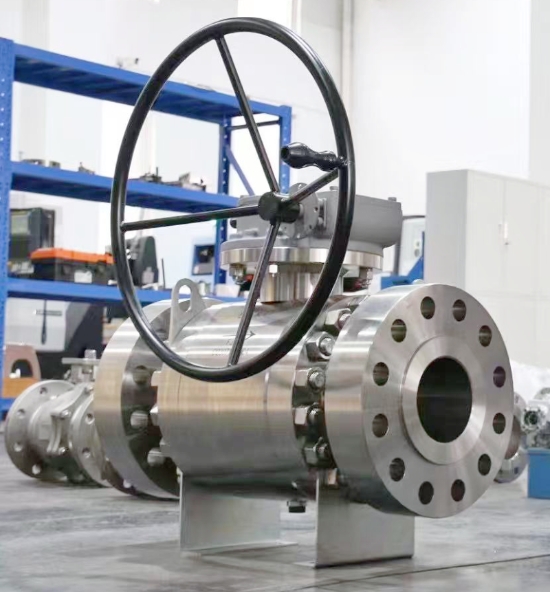
Trunnion mounted ball valves adopt dual upper and lower trunnion fixed support design, which locks the ball in a stable position. This structure effectively reduces sealing seat pressure and operating torque, minimizing wear and extending service life. Suited for large-size, high-pressure, and high-cycle working scenarios, trunnion ball valves are the mainstream heavy-duty solution for oil & gas transmission, petrochemical refining, and long-distance industrial pipeline systems.
1.2 Full Port Ball Valve & Reduced Port Ball Valve
Full port ball valves are designed with a straight-through bore matching the pipe inner diameter, achieving nearly zero flow resistance and ultra-low pipeline pressure drop. This design supports full pipeline pigging and cleaning operations, making it perfect for high-flow transmission pipelines and process main lines requiring unobstructed fluid passage and convenient daily maintenance.
Reduced port ball valves adopt a streamlined reduced bore structure, featuring lighter weight, smaller volume, and lower manufacturing costs. Although the flow passage is slightly narrowed, it fully meets conventional isolation and flow control demands. It is the most cost-effective option for ordinary industrial pipelines without strict low-pressure-drop or pigging requirements.
1.3 Soft Seated & Metal Seated Ball Valve
Soft seated ball valves utilize high-performance PTFE and polymer composite sealing materials, achieving absolute zero leakage under normal temperature and clean medium conditions. With low friction coefficient and flexible switching performance, they are widely applied in clean water, compressed air, natural gas, and non-abrasive conventional chemical media.
Metal seated ball valves adopt professional metal-to-metal hard sealing structure with alloy hard-facing treatment on sealing surfaces. Featuring excellent high-temperature resistance, high-pressure resistance, and abrasion resistance, they can stably operate in harsh environments such as abrasive slurry, corrosive media, and repeated thermal cycling, solving the aging and failure problems of soft sealing materials.
1.4 Manual & Actuated Ball Valves
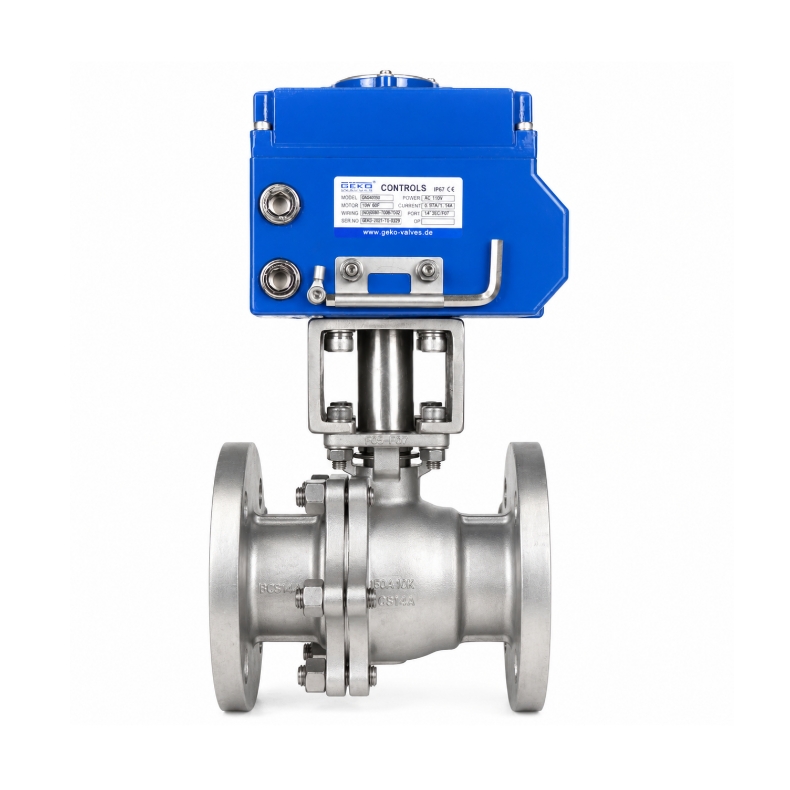
Manual ball valves with handle or gear operation are suitable for low-frequency manual control scenarios, with simple structure and low maintenance cost. For modern automated industrial systems,pneumatic actuated ball valves and electric actuated ball valves are essential configurations. Pneumatic ball valves provide fast switching speed and reliable explosion-proof performance for flammable and hazardous working conditions. Electric ball valves support precise flow modulation and remote signal linkage, perfectly matching PLC and SCADA intelligent control systems.
2. Common Industrial Applications of Ball Valves
Different ball valve types correspond to targeted industrial scenarios. Reasonable type matching based on process characteristics ensures long-term stable and reliable pipeline operation:
Water Treatment & HVAC Systems: Soft seated floating ball valves and reduced port ball valves are widely used for water supply, drainage, and central air conditioning circulation pipelines, balancing cost and sealing stability.
Oil & Gas Industry: Heavy-duty trunnion mounted ball valves and full port ball valves are adopted for long-distance transmission pipelines to ensure low pressure loss and support professional pipeline pigging maintenance.
Chemical & Petrochemical Plants: High-performance metal seated ball valves and anti-corrosion ball valves are configured for high-temperature, corrosive, and abrasive process media to adapt to severe service conditions.
Power Generation & Thermal Energy: High-temperature resistant metal seated ball valves are applied for steam pipelines, thermal cycling systems, and high-pressure process equipment to resist extreme temperature changes and medium scouring.
Intelligent Manufacturing: Automated pneumatic and electric actuated ball valves realize unmanned switching, remote monitoring, and precise flow regulation for intelligent production pipelines.
3. Standard Ball Valve Selection Criteria
Scientific ball valve selection must follow standardized criteria, avoiding simple size-only matching. The core selection rules cover structure, sealing, bore type, actuation, and working condition adaptation:
Structural Selection Criteria: Choose floating ball valves for small-bore, low and medium-pressure conventional pipelines; select trunnion mounted ball valves for large-bore, high-pressure, and high-frequency cycling heavy-duty pipelines.
Sealing Selection Criteria: Adopt soft seated ball valves for normal-temperature, clean, non-abrasive media requiring zero leakage; use metal seated ball valves for high-temperature, high-pressure, abrasive, and corrosive harsh working conditions.
Bore Type Selection Criteria: Prioritize full port ball valves for high-flow, low-pressure-drop pipelines and systems requiring pigging cleaning; choose reduced port ball valves for general isolation scenarios to save project costs.
Actuation Selection Criteria: Configure manual operation for low-frequency switching; select pneumatic actuators for explosion-proof hazardous areas; adopt electric actuators for remote intelligent control and precise flow regulation.
Working Condition Matching Criteria: Verify valve pressure class, temperature resistance grade, and material compatibility according to actual medium characteristics, operating temperature, and maximum working pressure to prevent sealing failure and valve damage.
4. Key Benefits of High-Quality Industrial Ball Valves
Qualified industrial ball valves deliver irreplaceable advantages for modern fluid control systems, including fast quarter-turn operation, compact installation space, bubble-tight shutoff performance, strong medium adaptability, and low long-term maintenance cost. Whether for general civil piping or heavy-duty industrial process systems, properly selected ball valves can effectively improve pipeline operational efficiency and reduce system failure rates.
5. GEKO Valve Reliable Ball Valve Solutions
GEKO Valve provides a full lineup of standardized and customized industrial ball valves, covering floating ball valves, trunnion mounted ball valves, full port & reduced port ball valves, soft seated & metal seated ball valves, and complete pneumatic/electric actuated ball valve packages. All products comply with international industrial standards, with rigorous quality inspection and stable performance. We provide professional one-stop selection guidance to match the most suitable ball valve for different industrial working conditions, delivering high-reliability and low-maintenance fluid control solutions for global industrial projects.
9 Core SEO Keywords: Industrial Ball Valve, High Pressure Ball Valve, Low Pressure Ball Valve, API Standard Ball Valve, Process Ball Valve, Quarter Turn Ball Valve, Isolation Ball Valve, Corrosion Resistant Ball Valve, Automated Ball Valve
اقرأ المزيد






 بريد إلكتروني
: info@geko-union.com
بريد إلكتروني
: info@geko-union.com
 بريد إلكتروني
: info@geko-valves.de
بريد إلكتروني
: info@geko-valves.de
 بريد إلكتروني
: tw@geko-union.com
بريد إلكتروني
: tw@geko-union.com
 بريد إلكتروني
: nl@geko-union.com
بريد إلكتروني
: nl@geko-union.com



 شبكة IPv6 مدعومة